


Germany’s mix of modern efficiency and old-world charm makes it a traveler favorite, but many are surprised by how often currency in Germany still means cash. While credit and debit cards are accepted widely, you’ll still need physical money in Germany for cafés, public toilets, and small shops-especially outside big cities. This guide helps you plan smartly: what currency to bring, how to get and exchange Euros (EUR), where to avoid bad rates, and key safety and etiquette tips. With this knowledge, you’ll avoid surprises and enjoy Germany with confidence.
How to pay in Germany – cash or card?
Simply put, ATM withdrawals in Germany will require some sort of planning. Here’s why.
You can use cash for:
- Budget hotels (some only accept cash or Maestro)
- Some hostels
- Local tour operators
- Shopping at street markets
- Tips and gratuities
- Entry fees to small museums, churches, or local attractions
- Local buses (when buying from drivers)
- Local taxis (some prefer cash)
- Street food
- Small eateries / restaurants
- Small purchases
- Local expenses at bakery, kiosks, etc.
- Tailoring services (independent shops)
- Laundry services (coin laundromats)
- Nightlife / bars (especially Berlin clubs and smaller pubs)
You can use card for:
- 4 and 5 star hotels
- Hostels (chain or urban hostels)
- Large tour operators
- Shopping at malls
- Entry fees to major museums, galleries, and cultural venues
- Airport transport (Deutsche Bahn, airport shuttles)
- Sit-down restaurants (increasingly so, but still check first)
- Upscale restaurants
- Online bookings for upscale hotels, flights, tours
- Spas
- Vehicle renting
- Mobile SIM and phone top-up (at telecom outlets)
- Emergency medical clinics / pharmacies
Germany has historically had a strong cash culture. While card usage is increasing, it’s not safe to assume card is accepted everywhere – especially at bakeries, kiosks, or street stalls. Carrying cash is essential.
What’s the best currency to take to Germany?
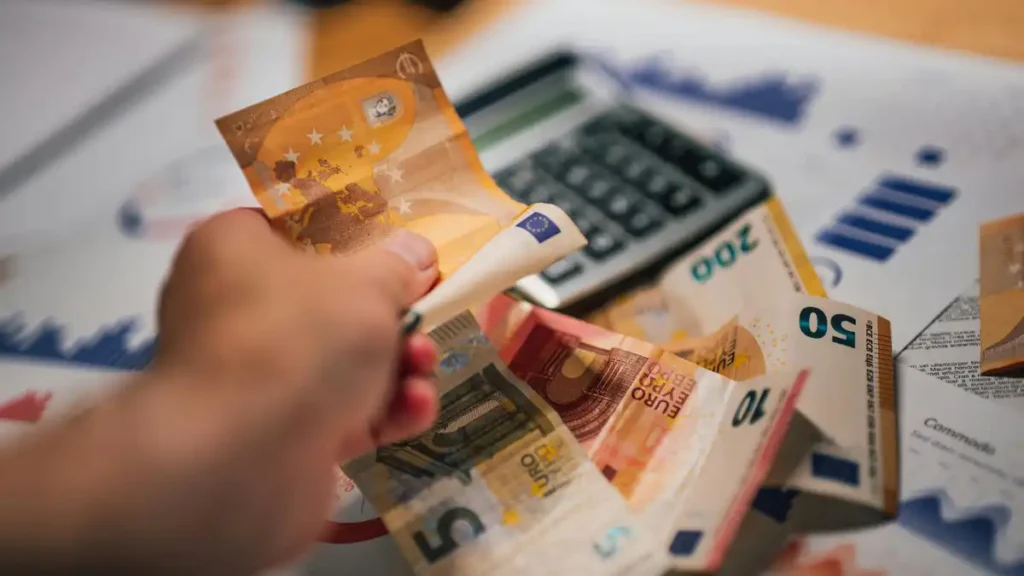
Since 2002, Germany’s official currency is the Euro (€). Euro is also the only locally accepted currency. You cannot use other currencies like US dollars or Pounds. There’s a small exception near the Swiss border where Swiss Francs are cool and accepted by the local shops. But remember, you’ll still get your change in good old Euros.
So, Euros is the best currency to take to Germany.
Where to get the local currency in Germany?
In Germany, you can get the local currency in 3 ways. These are:
ATMs, or
Currency exchange
Money transfer and local pick-up
Types of cards to swipe in Germany
Visa and Mastercard transactions are commonly accepted for swiping. You might also find some places that accept Amex and other cards, albeit less frequently.
Types of cards at ATMs in Germany
When withdrawing money in Germany, majority of the ATMs will accept Visa, Mastercard, Cirrus, Plus and Maestro cards. Some of them accept Amex, Unionpay, Discover cards. Cards such as JCB, Diners, Rupay are not usually accepted by many ATMs.
Should I exchange money before travelling to Germany?
If you’re arriving from a country that uses the Euro (EUR), there’s no need to exchange money before traveling to Germany. However, if you’re coming from a non-Euro country, it’s wise to bring a small amount of EUR for immediate expenses like transport, snacks, or tips upon arrival.
Germany has excellent ATM infrastructure. You can withdraw EUR from ATMs (Geldautomaten) at airports, railway stations, and city centers. Most ATMs accept Visa, Mastercard, Cirrus, Plus, and Maestro cards. Be aware of potential international fees from your home bank.
Currency exchange is available at airports, major train stations, and banks. Airport exchanges are convenient but tend to offer lower rates. For better value, use bank branches (such as Deutsche Bank, Commerzbank, or Sparkasse) or licensed exchange offices (Wechselstuben) in the city. Some ReiseBank locations offer exchange services with extended hours.
Germany is still a relatively cash-friendly country-especially in rural areas, smaller shops, or restaurants. While cards are widely accepted in urban areas, having some cash on hand is recommended. Carry a mix of payment options, and if you bring USD, GBP, or other currencies, they can be exchanged easily at banks or exchange bureaus.
Where to withdraw money in Germany
The best ATMs for foreigners to use in Germany are those owned by popular banks such as:
- Deutsche Bank,
- Landesbank, and
- Volksbank.
There are other popular bank ATMs in Germany that also accept International debit credit cards such as:
- Sparkasse
- Volksbank
- Landesbank
- Commerzbank
- ING-diBa
- Postbank
However, these can charge higher fees compared to the other banks to foreign cardholders.
You’ll also come across ATMs named Euronet, Cashzone, Travelex, FreeCash, MoneyMachine, etc. in Germany. These are not operated by a bank, they are operated by independent ATM operators.
Note – Deutsche Bank is the one German bank member of Global ATM Alliance. If your bank card is from another member of the Global ATM Alliance, you can withdraw money from Deutsche Bank ATM in Germany where Deutsche Bank ATM will not charge you fees.
For a detailed guide, read Cash and ATMs in Germany.
So stop paying unnecessary fees to withdraw your own cash abroad.
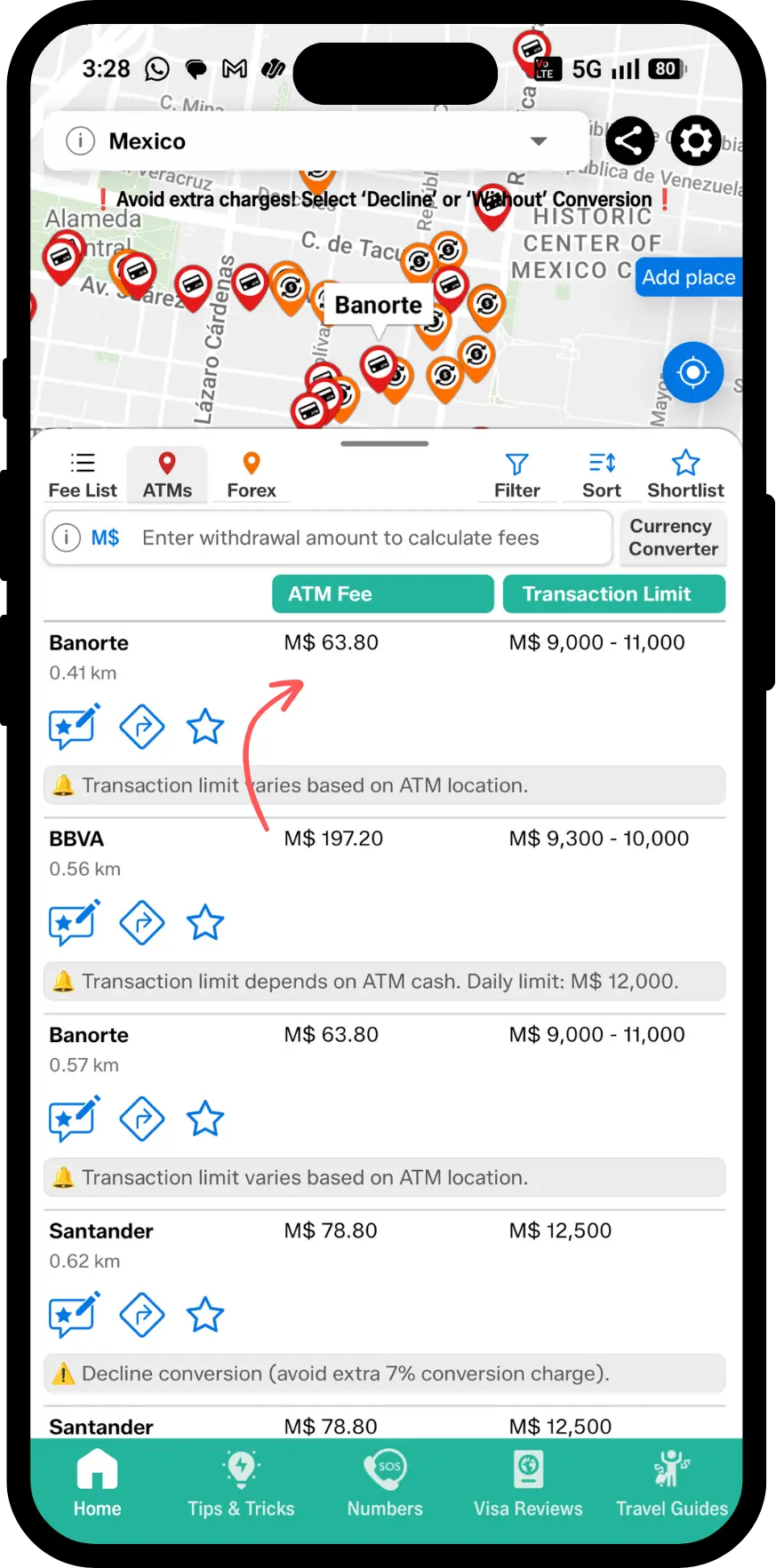
ATM Fee Saver shows you fee-free ATMs, with the latest fees and transaction limits. Know the cost before you withdraw.
Find fee-free ATMs in 180+ countries. Download free.


Where to exchange currency in Germany
In Germany, you can exchange currency at authorised currency exchanges, banks, airports, and hotels, the most popular being banks.
In Germany, currency exchange offices are called “Wechselstuben” and are mostly found in major cities, airports, and near central train stations. However, they are not as widespread as in other countries due to the country’s heavy reliance on card payments.
- Notable currency exchanges are:
ReiseBank AG – has branches at major train stations and all major airports including Frankfurt, Munich, and Berlin.
Exchange AG – found in tourist areas like Berlin Mitte and Munich’s Marienplatz.
Eurochange – small kiosks in some shopping districts.
While convenient, rates at airport branches may include higher fees.
- Banks Offering Currency Exchange:
Deutsche Bank
Commerzbank
Sparkasse
Postbank
Not all bank branches offer currency exchange, and many require prior appointment or being an account holder.
💡 Tip: Germany uses the Euro (EUR). If arriving from another Eurozone country, there’s no need to exchange. If coming from a non-Euro country, exchanging a small amount for immediate use and relying on ATMs or cards for further spending is a good strategy.
Pro-tips:
Stay away from airport exchanges – Poor rates
Avoid the black market – Be wary of being conned.
Include fresh notes – If your notes are damaged or dirty, you can expect to pay more or less.
Is carrying money in Germany safe?
Incidents of mugging, threats or robberies in Germany are rare. So, it’s usually safe to carry cash in Germany while travelling. But here are some general precautions to follow:
Some safety tips for carrying cash while travelling in Germany are:
Carry only the cash you need.
Do not keep all the cash in one pocket or wallet.
Put some cash in a safety belt or fanny pack.
Do not flash your cash.
When paying, do not remove or display your entire cash.
Keep wallets preferably in front pockets.
Cross-wear your purses if possible.
Hold your purses, wallets and bags close and tight on crowded streets and in public trains and buses.
When withdrawing cash, keep the cash low while you count it so people around don’t see it.
If you’re dining alone, don’t leave your wallet / bag unattented while you go to the restroom.
If sitting outdoors in a restaurant, don’t leave your wallets / bags on the table.
Is it better to use debit or credit cards or pay by cash in Germany
Use a card if it is fee-free i.e. your bank does not charge any fees to swipe the card, when the merchant / POS also does not impose any extra charge to use a card, you need to use the insurance of the card, don’t want to block cash of large purchases and card’s swipe fees are lower than withdrawal fees.
Pay by cash by withdrawing cash from ATM or exchanging currency where – fees on ATM withdrawals are lesser than fees on swiping cards, you don’t want to leave any digital footprint of your expenses, it is convenient and easier to conduct transactions.