

Malaysia is a vibrant mix of cultures, cuisines, and landscapes-from bustling Kuala Lumpur to serene beaches and lush highlands. To enjoy it all with ease, it’s important to understand how currency in Malaysia works. The Malaysian Ringgit (MYR) is the official currency, and while cards are widely accepted in urban areas, cash is still king in rural regions, night markets, and small eateries. ATMs are plentiful, but it’s wise to carry backup cash and know where to exchange money safely. This guide breaks down everything you need to know about money in Malaysia, including exchange options, payment trends, and security tips to help you avoid tourist traps.
How to pay in Malaysia – cash or card?
Even though Malaysia is moving towards a cashless society, 35% of transactions still involve cash, making it the preferred method of payment for visitors in particular. While credit cards and digital wallets are becoming more popular, cash is still the preferred method of payment. Especially in less developed areas, cash is highly preferred. Travellers should be ready to make many purchases with cash, though larger cities and more commercial areas frequently accept card and digital payments.
You can use cash for:
- Budget hotels
- Hostels
- Local tour operators
- Tips and gratuities
- Local buses (some still take cash in rural areas)
- Local taxis (especially non-metered or hailed off-street)
- Street food
- Small eateries / restaurants
- Sit-down restaurants (older or local-only venues)
- Small purchases
- Local expenses at grocery stores, local shops, street vendors
- Mobile SIM and phone top-up (prepaid reloads)
- Laundry services
- Tailoring services
- Nightlife / bars (local pubs or rural nightlife)
You can use card for:
- 4 and 5 star hotels
- Large tour operators
- Shopping at malls
- Entry fees to museums, parks, cultural attractions
- App-based taxis (Grab is widely used)
- Local trains (KTM, LRT, MRT all accept card or travel cards)
- Airport transport (KLIA Ekspres, taxis, airport buses)
- Sit-down restaurants (chains or city centers)
- Upscale restaurants
- Online bookings for upscale hotels, flights, tours
- Spas
- Vehicle renting
- Emergency medical clinics / pharmacies
Cash (Malaysian Ringgit – MYR) is still commonly used for daily expenses, but urban areas are very card and QR-code-payment friendly. Grab is the most convenient app-based transport and payment tool.
What’s the best currency to take to Malaysia?
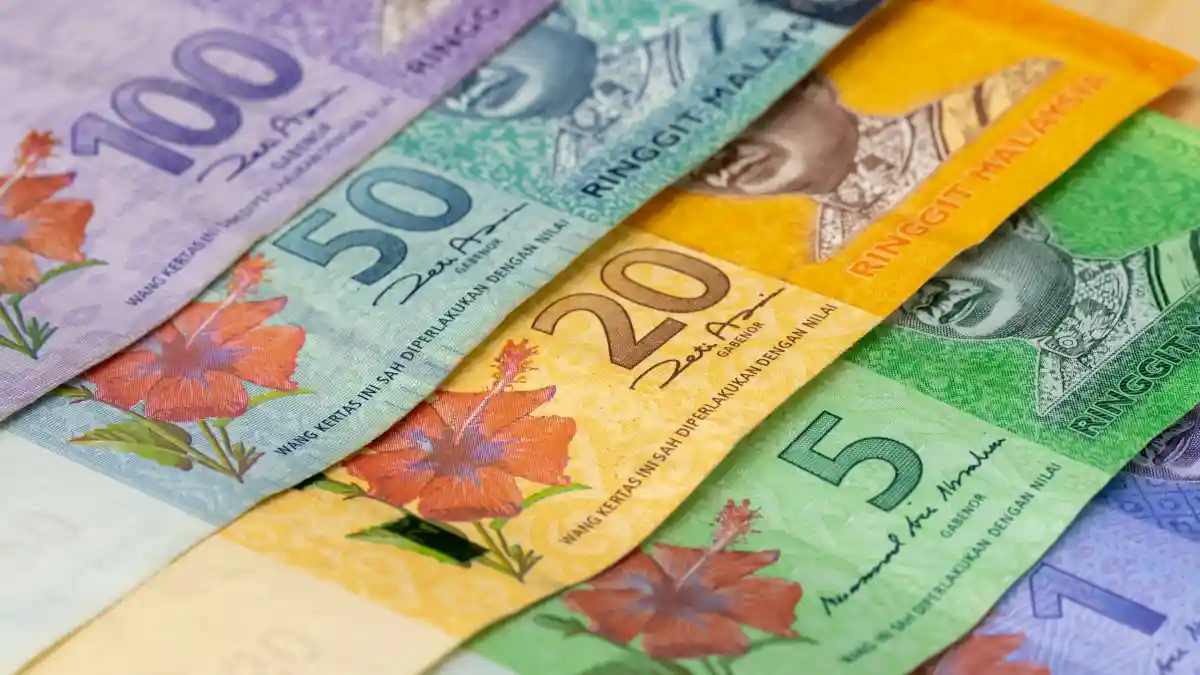
The Malaysian Ringgit (MYR) is Malaysia’s home currency. It is the most commonly accepted. It has note denominations of RM1, RM5, RM10, RM20, RM50, and RM100.
Use of Foreign Currencies: While not the norm, some upscale hotels and tourist-oriented establishments may take US dollars and euros. For the majority of purchases, the local currency is strongly preferred.
So, Malaysian Ringgit is the best currency to take to Malaysia.
Where to get the local currency in Malaysia?
In Malaysia, you can get the local currency in 3 ways. These are:
ATMs, or
Currency exchange
Money transfer and local pick-up
Pro-tip: Don’t purchase Ringgit in your home country (unless you are from Southeast Asia). Because while it is somewhat popular in South East Asia, the currency is not widely used globally. It will therefore be difficult to find it at home, and if you do, the exchange rate is likely to be unfavourable.
Types of cards to swipe in Malaysia
Visa and Mastercard transactions are commonly accepted for swiping. You might also find some places that accept Amex and other cards, albeit less frequently.
Types of cards at ATMs in Malaysia
When withdrawing money in Malaysia, majority of the ATMs will accept Visa, Mastercard, Cirrus, Plus and Maestro cards. Some of them accept Unionpay, Amex, Diners. Cards such as Discover, Rupay, JCB are not usually accepted by many ATMs.
Should I exchange money before travelling to Malaysia?
It’s a good idea to bring a small amount of Malaysian Ringgit (MYR) before traveling for immediate expenses like taxis, SIM cards, or snacks at the airport. However, exchange rates outside Malaysia are often less favorable, and not all foreign banks carry MYR.
A better approach is to withdraw MYR from ATMs upon arrival. ATMs are widely available at airports, in cities like Kuala Lumpur, Penang, and Johor Bahru, and in tourist areas. Most accept Visa, Mastercard, Cirrus, Plus, and Maestro cards. Be sure to check international ATM fees and notify your bank of your travel plans.
Currency exchange in Malaysia is straightforward, and exchange bureaus-especially in malls or central city areas-often offer competitive rates. Airport counters are convenient but typically have higher fees.
Cards are accepted at most hotels, restaurants, and shopping malls, but cash is still useful for public transport, markets, and small vendors. Carrying a mix of cash and cards ensures flexibility.
Where to withdraw money in Malaysia
The best ATMs for foreigners to use in Malaysia are those owned by popular banks such as:
- Alliance Bank,
- Hong Leong Bank,
- OCBC,
- Public hBank,
- CIMB, and
- United Overseas Bank (UOB).
There are other banks such as HSBC, AM Bank, RHB Bank, Affin Bank, Stan Chart, BSN and Maybank that also accept international debit and credit cards. These banks also don’t charge ATM fees for majority of the foreign cardholders, but can charge ATM Fees for specific foreign card types.
For a detailed guide, read Cash and ATMs in Malaysia.
Discover fee-free and low-fee ATMs on the ATM Fee Saver mobile app for iOS and Android. This app provides ATM PINs and details of leading bank ATMs such as ATM fees and withdrawal limits for foreign cardholders at ATMs in Malaysia. Moreover, its simple fee calculator helps you determine exact withdrawal charges. You can also find cash tips and tricks on the app for 160+ countries including Malaysia.
Download now from the App Store or Play Store.
Download ATM Fee Saver now.


Where to exchange currency in Malaysia
In Malaysia, you can exchange currency at authorised currency exchanges, banks, airports, and hotels, the most popular being authorised currency exchanges.
Malaysia has a strong network of licensed money changers, especially in major cities and tourist hubs. These often offer better rates than banks and are widely preferred by travelers.
- Notable currency exchanges in Malaysia are:
Kuala Lumpur: Mid Valley Megamall, Suria KLCC, Bukit Bintang, and Pavilion Mall, namely Vital Rate, MV Forex, Spectrum Forex
Penang: Komtar, Gurney Plaza, and Queensbay Mall
Langkawi & Kota Kinabalu: Tourist areas and shopping malls
All licensed money changers display their license and exchange rates publicly. Operating hours typically match mall hours (10:00 AM – 10:00 PM).
- Banks Offering Currency Exchange:
Maybank
CIMB Bank
RHB Bank
Public Bank
Banks are reliable but usually offer less competitive rates and shorter hours.
💡 Tip: You’ll get the best rates exchanging cash (USD, EUR, GBP, SGD) at city-based money changers. ATMs are widespread and accept foreign cards.
Pro-tips:
Stay away from airport exchanges – Poor rates
Avoid the black market – Be wary of being conned.
Include fresh notes – If your notes are damaged or dirty, you can expect to pay more or less.
Is carrying money in Malaysia safe?
Yes, it is generally safe to carry cash when travelling in Malaysia. You should always have some cash on you since you may need it for the different purposes. However, avoid needlessly carrying more cash than you need. The following tips will help you protect your cash when travelling in Malaysia:
Some safety tips for carrying cash while travelling in Malaysia are:
Carry only the cash you need.
Do not keep all the cash in one pocket or wallet.
Put some cash in a safety belt or fanny pack.
Do not flash your cash.
When paying, do not remove or display your entire cash.
Keep wallets preferably in front pockets.
Cross-wear your purses if possible.
Hold your purses, wallets and bags close and tight on crowded streets and in public trains and buses.
When withdrawing cash, keep the cash low while you count it so people around don’t see it.
If you’re dining alone, don’t leave your wallet / bag unattented while you go to the restroom.
If sitting outdoors in a restaurant, don’t leave your wallets / bags on the table.
Is it better to use debit or credit cards or pay by cash in Malaysia
Use a card if it is fee-free i.e. your bank does not charge any fees to swipe the card, when the merchant / POS also does not impose any extra charge to use a card, you need to use the insurance of the card, don’t want to block cash of large purchases and card’s swipe fees are lower than withdrawal fees.
Pay by cash by withdrawing cash from ATM or exchanging currency where – fees on ATM withdrawals are lesser than fees on swiping cards, you don’t want to leave any digital footprint of your expenses, it is convenient and easier to conduct transactions.