


Kenya’s thrilling wildlife, diverse landscapes, and energetic cities make it a bucket-list destination-but understanding money in Kenya is key to a smooth trip. The official currency is the Kenyan Shilling (KES), and cash is widely used across the country, especially outside major cities. While digital payments and mobile money services like M-Pesa dominate local life, they may not be accessible to tourists. ATMs are available in cities, but rural access is limited, and not all machines accept foreign cards. This guide helps you navigate currency in Kenya, including the best ways to exchange money, how much cash to carry, and how to stay secure while exploring the country’s many contrasts.
How to pay in Kenya – cash or card?
While many larger establishments accept credit and debit cards in Kenya, most people still prefer to pay with cash in smaller towns and rural areas.
You can use cash for:
- Budget hotels
- Hostels
- Local tour operators (especially in rural areas or smaller safari outfits)
- Tips and gratuities (common and usually in cash)
- Entry fees to national parks, historical sites, etc. (smaller ones)
- Local buses (matatus and minibuses)
- Local taxis (many prefer cash unless Bolt/Uber)
- Local tuk-tuks
- Street food
- Small eateries / restaurants
- Sit-down restaurants (non-chain or rural)
- Small purchases
- Local expenses at grocery stores, local shops, street vendors
- Laundry services
- Mobile SIM and phone top-up (airtime vendors and shops)
- Tailoring services
- Nightlife / bars (many prefer cash, especially local pubs)
You can use card for:
- 4 and 5 star hotels
- Large tour operators
- Shopping at malls
- Entry fees to major attractions, museums, safaris (via online booking)
- App-based taxis (Uber, Bolt)
- Airport transport (Nairobi Expressway and airport taxis accept card or M-Pesa)
- Sit-down restaurants (Nairobi, Mombasa)
- Upscale restaurants
- Online bookings for upscale hotels, flights, tours
- Spas (at hotels or malls)
- Vehicle renting (international providers)
- Emergency medical clinics / pharmacies (especially in urban areas)
Mobile payments via M-Pesa dominate Kenya’s landscape-even more than cards in some cases. But travelers still rely heavily on cash for local transport and small transactions.
What’s the best currency to take to Kenya?
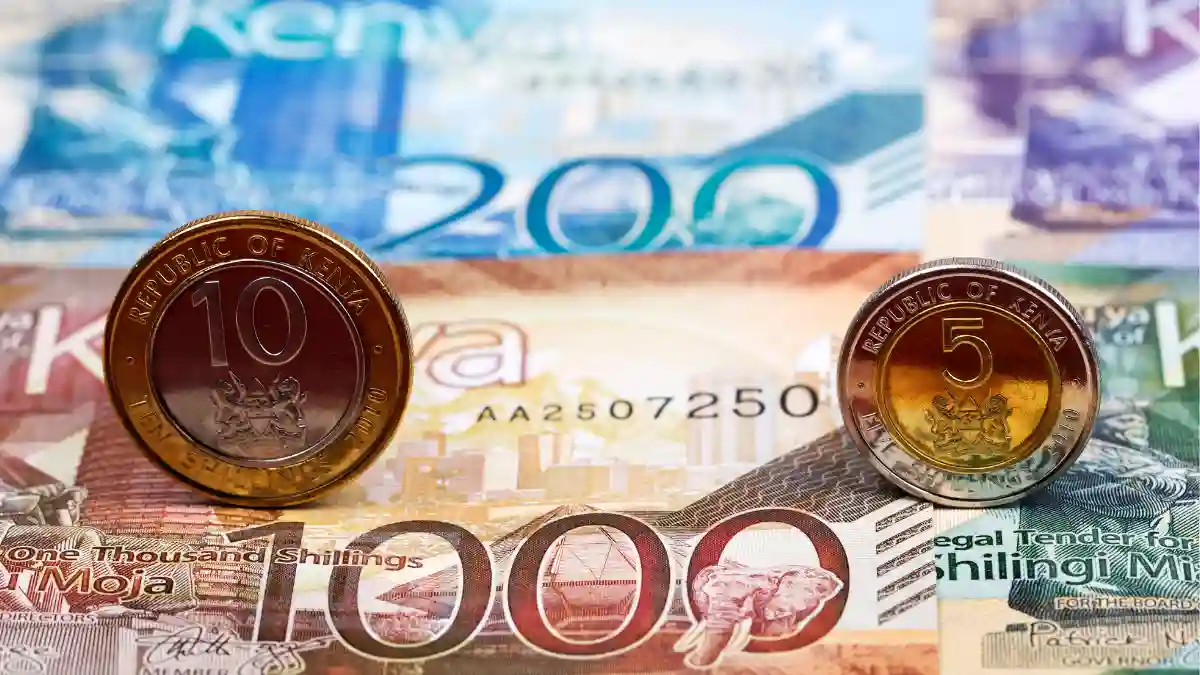
The Kenyan Shilling (KES) is the currency of Kenya. It comes in denominations of 50, 100, 200, 500, and 1000 KSh. Shilling is preferred at most establishments and transactions.
Tourist hotspots, safari tours, and five-star hotels generally also accept US dollars. To a lesser degree, Euros are also accepted. Even though pounds aren’t widely used anymore, some tourist-oriented establishments might still take them.
So, Kenyan Shilling is the best currency to take to Kenya.
Where to get the local currency in Kenya?
In Kenya, you can get the local currency in 3 ways. These are:
ATMs, or
Currency exchange
Money transfer and local pick-up
Types of cards to swipe in Kenya
Visa and Mastercard transactions are commonly accepted for swiping. You might also find some places that accept Amex and other cards, albeit less frequently.
Types of cards at ATMs in Kenya
When withdrawing money in Kenya, majority of the ATMs will accept Visa, Mastercard cards. Some of them accept Cirrus, Plus and Maestro, Unionpay, JCB cards. Cards such as Amex, Diners, Discover, Rupay are not usually accepted by many ATMs.
Should I exchange money before travelling to Kenya?
Bringing a small amount of Kenyan Shillings (KES) for immediate expenses like taxis, tips, or snacks upon arrival is useful, but foreign banks often don’t stock KES and rates abroad may be poor.
A practical option is to withdraw KES from ATMs upon arrival. ATMs are widely available in Nairobi, Mombasa, airports, and major towns. Most accept Visa and Mastercard, but not all support Cirrus or Plus networks-check with your bank and inquire about international ATM fees and daily limits.
If you bring USD, EUR, or GBP, you can exchange them at local banks or authorized forex bureaus in cities. Avoid airport counters, which often have lower rates. Make sure USD bills are in good condition and printed after 2006 for better acceptance.
Cards are accepted at upscale hotels, restaurants, and supermarkets, but cash is essential for smaller shops, local transport, and rural areas. Carrying a mix of cash and cards ensures convenience and flexibility.
Where to withdraw money in Kenya
The best ATMs for foreigners to use in Kenya are those owned by popular banks such as:
- Prime Bank,
- Gulf African Bank,
- I&M Bank,
- Co-op Bank, and
- GT bank.
There are other bank ATMs that also accept international debit and credit cards such as NCBA Bank, Sidian Bank, Ecobank, Diamond Trust Bank, Family Bank, National Bank, Equity Bank, Stanbic Bank, Standard Chartered, KCB (Kenya Commercial Bank), and Absa Bank. However, these ATMs can charge high ATM fees to foreign cardholders.
For a detailed guide, read Cash and ATMs in Kenya.
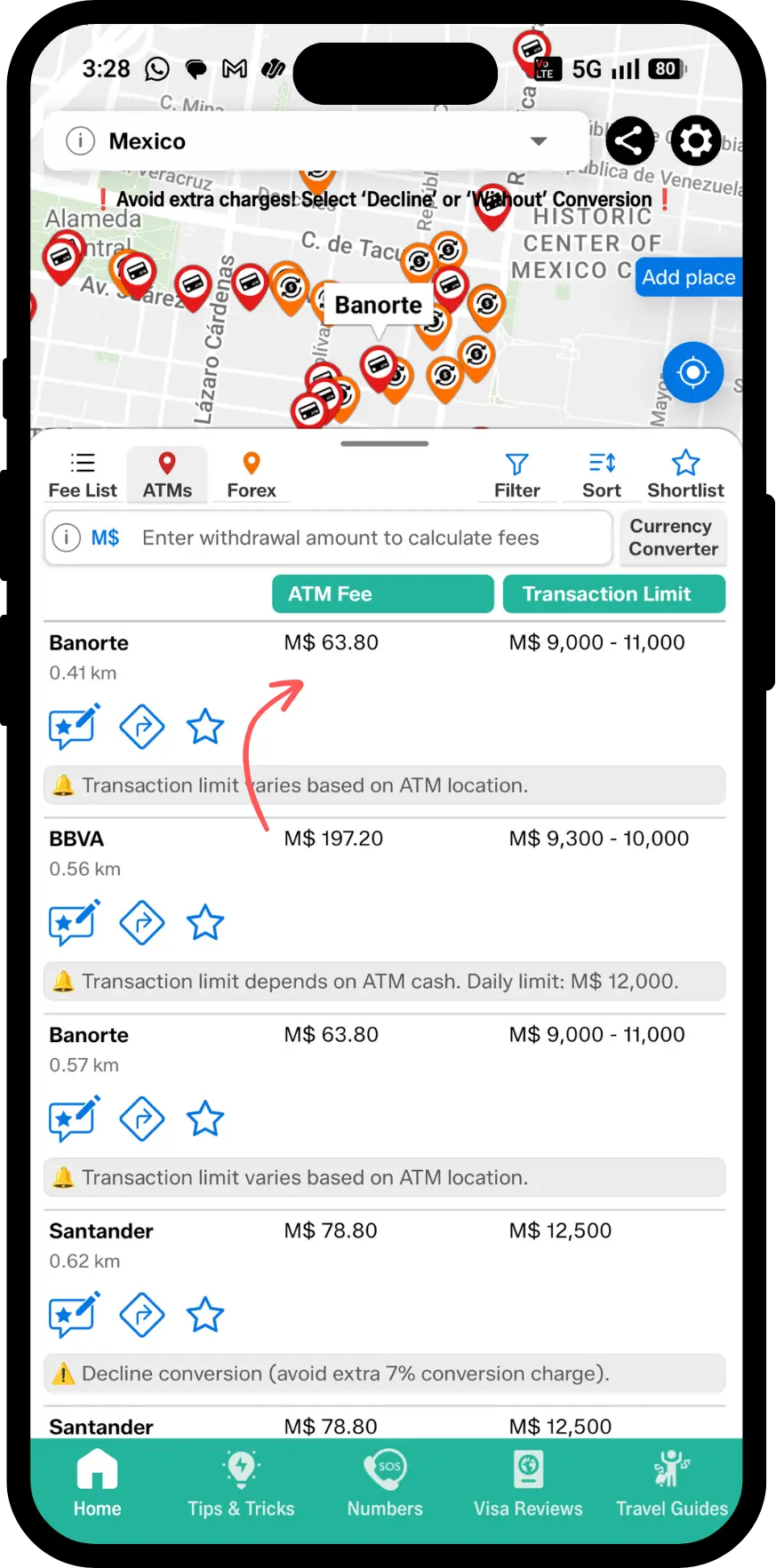
So stop paying unnecessary fees to withdraw your own cash abroad.
ATM Fee Saver shows you fee-free ATMs, with the latest fees and transaction limits. Know the cost before you withdraw.
Find fee-free ATMs in 180+ countries. Download free.


Where to exchange currency in Kenya
In Kenya, you can exchange currency at authorised currency exchanges, banks, airports, and hotels, the most popular being authorised currency exchanges.
Kenya has a robust network of licensed forex bureaus, especially in Nairobi and Mombasa. These offer better rates than hotels or airports and are your best bet for cash exchange.
Notable locations to find currency exchanges are:
Nairobi: Keyatta Avenue, Moi Avenue, and Westlands
Mombasa: Moi Avenue and Digo Road
- Notable currency exchanges are:
Victoria Forex Bureau
Express Forex Bureau
Sky Forex Bureau
Muthaiga Forex Bureau
Nairobi Bureau De Change
These offices are open Mon-Sat, usually 8:30 AM – 5:00 PM. Always check if rates are displayed and ask about any commissions.
- Banks Offering Currency Exchange:
Equity Bank
KCB (Kenya Commercial Bank)
Stanbic Bank
Absa Kenya
Banks are reliable but may involve paperwork or less favorable rates than forex bureaus.
💡 Tip: USD is the easiest to exchange, but notes must be clean, untorn, and printed in 2009 or later. ATMs are widely available and accept international Visa/Mastercard cards. Carry small denominations for taxis, local markets, and tipping.
Pro-tips:
Stay away from airport exchanges – Poor rates
Avoid the black market – Be wary of being conned.
Include fresh notes – If your notes are damaged or dirty, you can expect to pay more or less.
Is carrying money in Kenya safe?
No, usually. Carrying a large sum of money while travelling in Kenya is not a safe idea. While it’s true that some urban areas are safer than others, it’s still wise to bring along just enough cash to cover your expenses for the day or a few hours at most. Having some cash on hand is a good idea when visiting Kenya, so here are some ways to keep your money secure:
Some safety tips for carrying cash while travelling in Kenya are:
Carry only the cash you need.
Do not keep all the cash in one pocket or wallet.
Put some cash in a safety belt or fanny pack.
Do not flash your cash.
When paying, do not remove or display your entire cash.
Keep wallets preferably in front pockets.
Cross-wear your purses if possible.
Hold your purses, wallets and bags close and tight on crowded streets and in public trains and buses.
When withdrawing cash, keep the cash low while you count it so people around don’t see it.
If you’re dining alone, don’t leave your wallet / bag unattented while you go to the restroom.
If sitting outdoors in a restaurant, don’t leave your wallets / bags on the table.
Is it better to use debit or credit cards or pay by cash in Kenya
Use a card if it is fee-free i.e. your bank does not charge any fees to swipe the card, when the merchant / POS also does not impose any extra charge to use a card, you need to use the insurance of the card, don’t want to block cash of large purchases and card’s swipe fees are lower than withdrawal fees.
Pay by cash by withdrawing cash from ATM or exchanging currency where – fees on ATM withdrawals are lesser than fees on swiping cards, you don’t want to leave any digital footprint of your expenses, it is convenient and easier to conduct transactions.


Very informative