

From espresso bars in Rome to canals in Venice, Italy is a dream-but even in a modern Eurozone country, money in Italy requires thoughtful planning. Currency in Italy is the Euro (EUR), and while cards are commonly accepted, cash is still widely preferred for small purchases, especially in rural towns, markets, and cafés. This guide breaks down what to carry, where to get the best exchange rates, ATM tips, and dos and don’ts for handling currency in Italy like a local-so you spend more on gelato and less on bank fees.
How to pay in Italy – cash or card?
While tapping a card is getting more common, there’s still a good chance you’ll be using cash for about 50-60% of your transactions.
You can use cash for:
- Budget hotels (some independent B&Bs)
- Hostels
- Local tour operators (small agencies, walking tours)
- Tips and gratuities (though not always required)
- Street food (pizza al taglio, panini, gelato stands)
- Small eateries / restaurants (especially family-run trattorias)
- Small purchases
- Local expenses at street markets or kiosks
- Local buses (in smaller towns)
- Mobile SIM and phone top-up (tabaccherias)
- Laundry services (coin laundries, small shops)
You can use card for:
- 4 and 5 star hotels
- Large tour operators
- Shopping at malls and most stores
- Entry fees to museums, historical sites, churches with fees
- Airport transport (airport trains, taxis, shuttles)
- Sit-down restaurants
- Upscale restaurants
- Online bookings for upscale hotels, flights, tours
- Spas
- Tailoring services (in major cities)
- Vehicle renting
- Emergency medical clinics / pharmacies
- Local taxis / App-based taxis (many now accept card in major cities)
- Local trains (regional and high-speed)
Italy is card-friendly, but some small businesses and taxis prefer cash or may impose card minimums, especially outside big cities.
What’s the best currency to take to Italy?
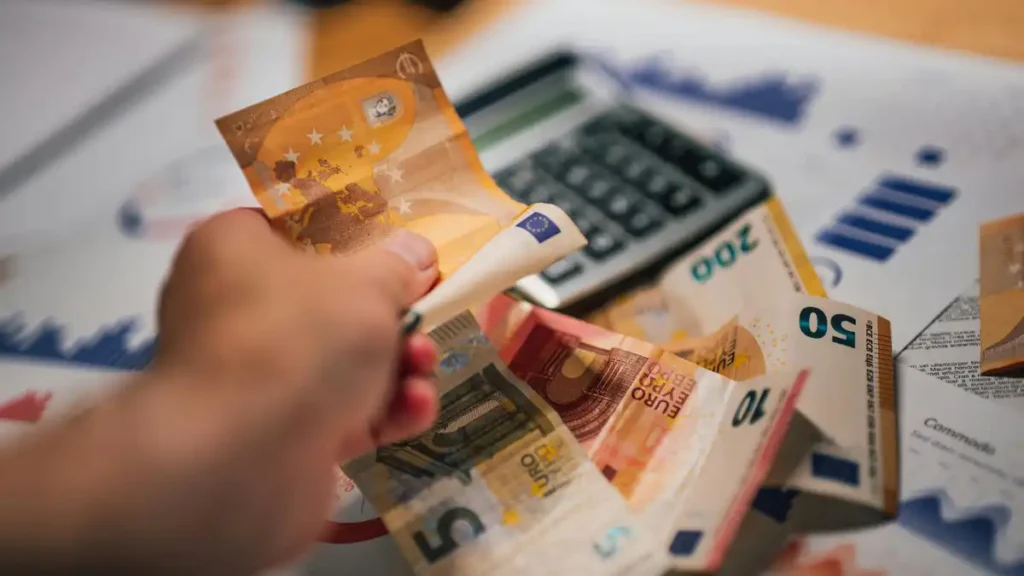
Italy mainly accepts its local currency Euros (EUR or €). Note denominations are € 5, 10, 20, 50, 100, 200, and 500. Other currencies are not usually accepted.
So, Euro is the best currency to take to Italy.
Where to get the local currency in Italy?
In Italy, you can get the local currency in 3 ways. These are:
ATMs, or
Currency exchange
Money transfer and local pick-up
Types of cards to swipe in Italy
Visa and Mastercard transactions are commonly accepted for swiping. You might also find some places that accept Amex and other cards, albeit less frequently.
Should I exchange money before travelling to Italy?
There’s generally no need to exchange money before travelling to Italy if you already hold Euros (EUR), as Italy is part of the Eurozone. If you’re coming from a non-Euro country, it’s advisable to bring a small amount of EUR for immediate expenses like transportation, tips, or snacks upon arrival.
ATMs (called “bancomat”) are widely available at airports, train stations, banks, and throughout cities and towns. Most accept Visa, Mastercard, Cirrus, Plus, and Maestro cards. Be sure to check your bank’s international ATM fees and notify them of your travel plans.
Currency exchange services are available at banks, post offices, and dedicated exchange bureaus, particularly in tourist areas. However, airport kiosks and hotel desks tend to offer poorer exchange rates and may charge higher commissions.
Card payments are widely accepted in Italy at hotels, restaurants, shops, and even taxis in most cities. That said, some small businesses or local cafés may prefer cash, especially in rural areas. Carrying a mix of cards and a small amount of cash ensures flexibility during your stay.
Where to withdraw money in Italy
The best ATMs for foreigners to use in Italy are those owned by popular banks such as:
- BCC Roma,
- Banca Sella,
- Mediolanum,
- Credem,
- Banco Di Sardegna,
- Banca Di Asti,
- BdM Banca, and
- Banco Desio.
There are other banks with ATMs that also accept international debit and credit cards such as Credit Agricole, Popolare di Sondrio, Banco BPM, BNL, Postamat, UniCredit, BPER Banca, Monte Di Paschi and Intesa San Paolo. However, these bank ATMs have no fees for some foreign cards and charge ATM Fees for specific foreign cards.
Global ATM alliance: Global ATM Alliance is a partnership among many banks in the world to allow its customers to withdraw cash from all partner banks abroad without any ATM fee. Many banks in the US, UK, Europe, Australia, and Latin America are part of the Global ATM Alliance, including Bank of America, Barclays, Deutsche Bank, and others. There is BNL in Italy part of this group.
For a detailed guide, read Cash and ATMs in Italy.
So stop paying unnecessary fees to withdraw your own cash abroad.
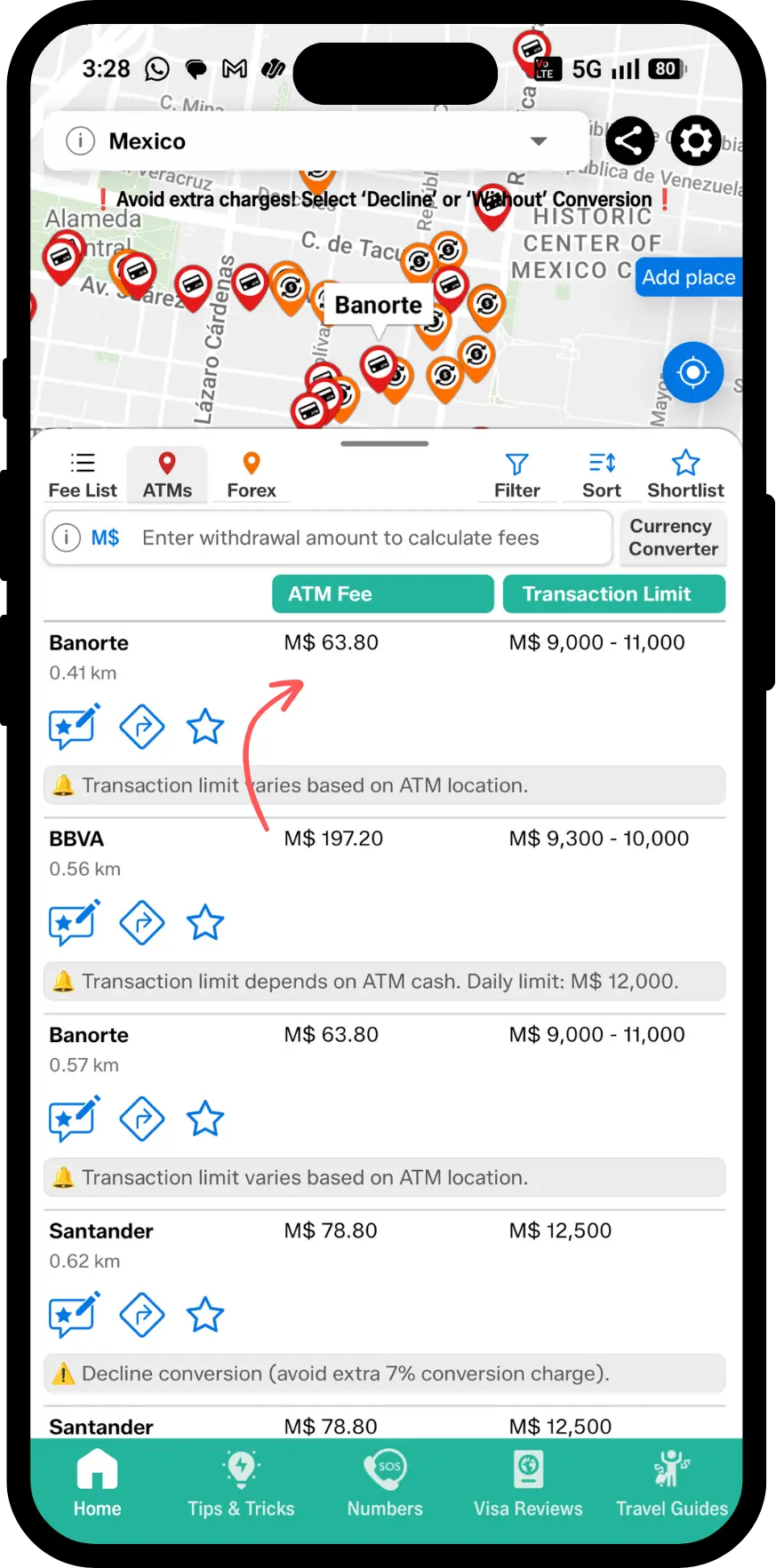
ATM Fee Saver shows you fee-free ATMs, with the latest fees and transaction limits. Know the cost before you withdraw.
Find fee-free ATMs in 180+ countries. Download free.


Where to exchange currency in Italy
In Italy, you can exchange currency at authorised currency exchanges, banks, airports, and hotels, the most popular being authorised currency exchanges.
Currency exchange offices, commonly referred to as “cambio”, are available in all major Italian cities, airports, and tourist zones. However, rates and fees can vary significantly.
Popular locations:
Rome: Termini Station area, Via del Corso, and near the Vatican
Milan: Milano Centrale Station, Corso Buenos Aires
Venice: Piazzale Roma and near Rialto Bridge
Florence: Around Santa Maria Novella Station and Via de’ Calzaiuoli
- Notable currency exchanges are:
Ria Money Transfer and Exchange
Eurochange.
Be cautious of hidden fees in tourist-heavy spots. Always ask for the net amount you’ll receive before confirming.
- Banks Offering Currency Exchange:
UniCredit
Intesa Sanpaolo
Banca Nazionale del Lavoro (BNL)
Poste Italiane (Italy’s postal service also offers exchange services)
Bank branches are open weekdays, typically from 8:30 AM to 1:30 PM and 2:30 PM to 4:00 PM. Many are closed on weekends.
💡 Tip: ATMs (bancomat) are widely available and often offer better rates than over-the-counter exchanges. Carry some cash for small purchases, especially in rural areas and cafés that may not accept cards.
Pro-tips:
Stay away from airport exchanges – Poor rates
Avoid the black market – Be wary of being conned.
Include fresh notes – If your notes are damaged or dirty, you can expect to pay more or less.
Is carrying money in Italy safe?
Incidents of mugging, threats, or robberies are rare in Italy, except in top tourist spots where pickpocketing and theft can occur. Plan accordingly and follow these precautions:
Some safety tips for carrying cash while travelling in Italy are:
Carry only the cash you need.
Do not keep all the cash in one pocket or wallet.
Put some cash in a safety belt or fanny pack.
Do not flash your cash.
When paying, do not remove or display your entire cash.
Keep wallets preferably in front pockets.
Cross-wear your purses if possible.
Hold your purses, wallets and bags close and tight on crowded streets and in public trains and buses.
When withdrawing cash, keep the cash low while you count it so people around don’t see it.
If you’re dining alone, don’t leave your wallet / bag unattented while you go to the restroom.
If sitting outdoors in a restaurant, don’t leave your wallets / bags on the table.
Is it better to use debit or credit cards or pay by cash in Italy
Use a card if it is fee-free i.e. your bank does not charge any fees to swipe the card, when the merchant / POS also does not impose any extra charge to use a card, you need to use the insurance of the card, don’t want to block cash of large purchases and card’s swipe fees are lower than withdrawal fees.
Pay by cash by withdrawing cash from ATM or exchanging currency where – fees on ATM withdrawals are lesser than fees on swiping cards, you don’t want to leave any digital footprint of your expenses, it is convenient and easier to conduct transactions.